Bitcoin Faces a Decisive Weekly Close
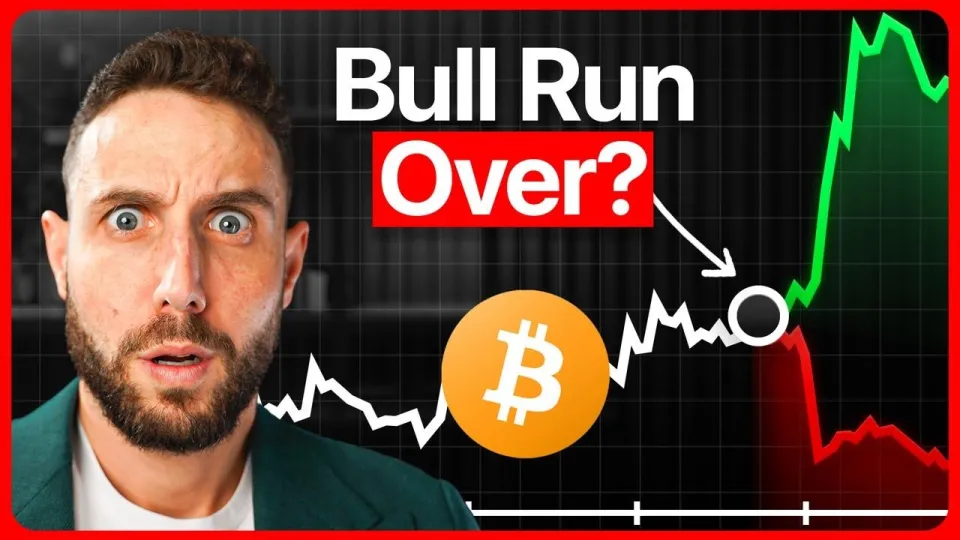
Video: Bitcoin Has 2 DAYS to Save the Crypto Bull Run
You can order the same kind of articles for your own video to boost it on YouTube and Google. Just message the Telegram bot @sat_sit_bot. It writes articles around your video, embeds the video and publishes them on popular niche websites (no ads). Free trial — 50 articles.
· based on the channel EllioTrades
Key takeaways
- Bitcoin's weekly close is the single most important trigger for the next directional move in the crypto market.
- A close below the key weekly support zone invalidates the bullish structure and shifts the plan toward lower targets.
- Holding support keeps the bull case alive and turns the retrace into a buying opportunity in BTC and select altcoins.
- The MSCI decision on digital asset treasury companies such as MSTR is a separate macro catalyst to track.
- Altcoin entries only make sense while Bitcoin holds its weekly support; a breakdown means sitting in cash.
Bitcoin is trading into a weekly close that decides whether the crypto bull run continues or the market rolls over into a deeper correction. The plan is simple: if BTC holds its weekly support zone, the retrace is a buying opportunity in Bitcoin and select altcoins; if the weekly candle closes below it, the bullish structure is broken and lower targets come into play. Traders who want to position around the outcome can use the Kalshi market link with the $50 bonus to trade the event directly instead of only spot exposure.
Why the weekly close matters more than any daily candle
A weekly close is the only price print that aggregates five days of positioning, funding and spot flow, which is why it carries more weight than any single daily move. Daily wicks get reversed by a single large order; a weekly close below support means sellers held control through the entire week, including the weekend liquidity gap.
That is the core of the setup described by EllioTrades: the market has one weekly candle left to defend the level that keeps the bull run intact. Three things follow from that:
- The level is defined in advance, not after the fact. The support zone is set before the close, so the reaction is mechanical rather than emotional.
- The invalidation is binary. Either the candle closes above support or it does not; there is no "mostly held."
- Position sizing happens before the close, not during it. Risk is defined while liquidity is still normal.
For spot holders the practical consequence is that the next 48 hours are about observation, not action. For leveraged traders it is about reducing size so a single candle cannot force a liquidation.
The two scenarios and the levels that define them
Holding weekly support keeps the higher-timeframe uptrend valid and turns the current pullback into a standard retrace within a bull market. In that scenario the sequence is: support holds, price reclaims the short-term range high, and capital rotates back into large-cap altcoins first and high-beta names second.
Losing the weekly level changes the map. A confirmed break shifts the bias toward a deeper flush, with the next demand zones below the range acting as the first real bounce candidates. In that case the correct response is not to average down on altcoins but to raise cash and wait for a weekly reclaim.
The mistake most traders make is treating both scenarios as equally likely and staying fully positioned. The asymmetry is in the risk: holding through a confirmed weekly breakdown costs far more than missing the first hours of a reclaim.
Which altcoins are in play if support holds
Altcoin exposure only makes sense as a second step after Bitcoin confirms its weekly close. The logic is that BTC dominance typically rises during a defensive phase and falls once Bitcoin stabilizes, which is when capital flows down the risk curve.
The watchlist approach that works in this kind of tape:
- Large caps with deep liquidity first, because they recover fastest when the market turns.
- Names with a clear invalidation level, so the trade can be cut without debate.
- No new entries while Bitcoin is still mid-candle on the weekly; wait for the print.
- Avoid shorting altcoins into support, since the squeeze risk on a Bitcoin bounce is disproportionate.
One recurring debate among viewers is whether shorting a beaten-down altcoin such as NEAR into support is a good trade. The answer depends entirely on Bitcoin's weekly close: shorting alts while BTC defends support is a low-reward, high-risk position, because a single green weekly candle forces covering across the whole sector.
The macro catalyst traders are underestimating
The MSCI decision on digital asset treasury companies, including Strategy (MSTR), is a separate catalyst that can move the market independently of Bitcoin's technicals. Index providers reviewing whether companies whose balance sheets are essentially leveraged Bitcoin proxies belong in global indexes create a mechanical flow risk: a delisting or exclusion decision would force index funds to sell, regardless of what BTC does that week.
That matters for the bull run case because it is a supply event that technical analysis cannot price in advance. A trader watching only the BTC chart can be right on the level and still get stopped out by an index rebalancing headline. The practical takeaway is to keep the position small enough that a macro headline does not dictate the exit.
Sentiment, bear-market length and the bull case
Sentiment has flipped from euphoric to bearish on a single retrace, which is itself information: crowd positioning turns fastest at exactly the moments when the higher-timeframe trend is being tested. Two arguments from the audience deserve a straight answer.
The first is that a very short bear market implies a weak next bull market. History offers no clean rule here; what matters more is how much leverage was flushed and how quickly spot demand returns. A shallow correction that clears leverage can precede a durable uptrend, while a long grind lower often produces a stronger recovery precisely because positioning is cleaner.
The second is the claim that a trader should prefer a deeper crash to buy cheaper. Waiting for a major setback sounds attractive, but it lowers the probability that the bull market continues at all. Buying slightly higher inside a confirmed uptrend is usually the better expected-value trade than buying lower inside a broken one.
A practical checklist for the next 48 hours
- Mark the weekly support zone on BTC before the candle closes and write down the invalidation price.
- Reduce leverage so that a wick to the next level below does not trigger a liquidation.
- Do not open new altcoin positions until the weekly candle prints.
- If support holds, scale into large caps first and keep a cash buffer for a retest.
- If support breaks, close discretionary altcoin risk, keep stablecoins ready and wait for a weekly reclaim before re-engaging.
- Track the MSCI index decision as an independent risk, not as a reason to override the chart.
Tools and links from the breakdown
- Trade $50, get $50 on Kalshi — event markets on macro and crypto outcomes.
- Liquid with 10% off trading fees — derivatives trading venue.
- WEEX deposit bonus up to $4,000 — deposit $100 to unlock the bonus tiers.
- EllioTrades on fomo — the public trading journey.
- EllioTrades on X — chart updates between videos.
Conclusion
The next weekly Bitcoin close is the decision point: hold support and the bull run stays alive with altcoins as the second-stage trade, lose it and the plan shifts to capital preservation and lower demand zones. Position size, not prediction, is what determines the outcome for most traders over the next two days. EllioTrades lays out the levels and the altcoin watchlist in the video breakdown above, and the same framework applies whether you trade spot or events. If you want to take a view on the outcome, you can claim the $50 Kalshi bonus here and size the position before the candle closes.
Source: Bitcoin Has 2 DAYS to Save the Crypto Bull Run · Markdown version
Questions & answers
What happens to Bitcoin if the weekly candle closes below support?
The bullish higher-timeframe structure is invalidated and the bias shifts toward a deeper flush into the next demand zones below the range. In that case the disciplined response is to cut discretionary altcoin risk, hold stablecoins and wait for a weekly reclaim before re-engaging.
Should I buy altcoins before Bitcoin confirms its weekly close?
No. Altcoin entries only make sense after BTC prints a weekly close above support, because capital rotates down the risk curve once Bitcoin stabilizes. Entering early means taking correlated risk without confirmation of the trigger.
Is shorting a beaten-down altcoin like NEAR a good trade here?
Only if Bitcoin loses its weekly support. Shorting alts into support while BTC holds is a low-reward, high-risk position, because a single strong weekly candle in Bitcoin tends to force short covering across the entire altcoin sector.
Why does the MSCI decision on MSTR matter for crypto prices?
Index providers reviewing digital asset treasury companies can trigger mechanical selling if those firms are excluded, since index funds must rebalance regardless of Bitcoin's price. It is a supply event that technical analysis cannot anticipate, so it belongs in the risk plan alongside the weekly close.